The Weighted Vest and Your Bones: The Loading Strategy the Density Research Supports
Bone responds to load, and the weighted vest is the simplest way to raise walking’s loading dose — the research on vest-walking and bone density being genuinely encouraging — with a protocol and cautions worth knowing. The vest-for-bones guide.

The Bone-Loading Science
Why vests reach bone: the mechanostat principle (the bone building where loads demand — the use-it-or-lose-it law from the bone doctrine; the walking’s loading raised by every added kilo), the vest-research signals (the vest-walking studies in postmenopausal women showing density preservation-and-gains — the long-term programs from the falls-and-bones research; the encouraging-not-miraculous honesty per the evidence doctrine), the impact-and-load pairing (the vest amplifying ground forces gently — the heel-strike loading; the vest-plus-heel-drops combination from the bone doctrine; the jumping tier for the cleared per the plyo doctrine), the site-specificity note (the loading benefiting the loaded bones — the hips-and-spine served by vest walking; the wrists needing their own work per the bone doctrine), and the timeline truth (the bone remodeling on months-to-years — the density changes measured at annual scans per the patience doctrine; the habit being the prescription).

The Protocol
Vest-walking for bone: the starting dose (the 3-5 percent bodyweight entry — the below-the-general-start caution for the bone-priority population; the gradual-ramp law from the vest doctrine doubled), the progression path (the weight raised by half-kilos monthly toward 8-10 percent — the walking time held while load climbs per the one-dial doctrine), the session shape (the 30-minute brisk vest walks, three-five weekly — the daily-wear-around-house option adding dose per the NEAT doctrine; the posture watch under load per the posture doctrine), the impact additions (the heel drops and low hops from the bone doctrine layered for the cleared — the vest-plus-impact being the fuller stimulus), the strength-training partnership (the resistance work remaining the bone gold standard per the muscle doctrine — the vest walking as the accessible daily layer, not the replacement; the both-and program), and the consistency framing (the years-long habit being the intervention — the vest by the door per the staging doctrine; the walk you already take, upgraded).
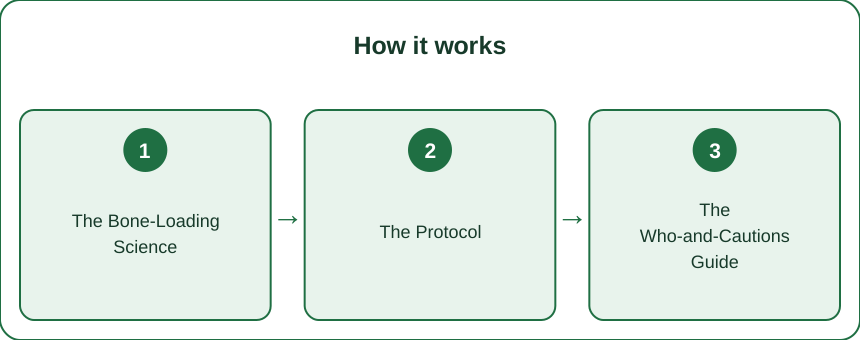
The Who-and-Cautions Guide
Matching the tool: the prime candidates (the postmenopausal density-defenders from the menopause doctrine — the family-history planners; the astronaut-logic prevention crowd building peak bone early per the bone doctrine), the medical-first cases (the diagnosed osteoporosis cleared with the doctor BEFORE loading — the fracture-history and spine-condition conversations per the medical doctrine; the vest being contraindicated for some presentations), the joint-and-floor considerations (the knee-and-hip histories ramping slower per the joint doctrine — the pelvic-floor load awareness from the floor doctrine: the symptoms meaning reassess), the posture prerequisite (the load carried tall — the vest amplifying slouch as readily as strength per the posture doctrine; the light-start protecting form), the alternatives honesty (the rucking backpack from the rucking doctrine doing similar work — the strength training and impact ladders serving the vest-averse; the tool being one of several per the options doctrine), and the closing frame (the vest as the bone bank’s easiest deposit slip — the light start, the patient ramp, the years of loaded walks; the skeleton, quietly reinforced on the school run). Three-percent start, half-kilo monthly raises, doctor-first if diagnosed: the bones, loaded wisely.
Bone builds where load demands, and vest-walking research in postmenopausal women is genuinely encouraging: start at 3-5 percent bodyweight (lower than general vest guidance), raise by half-kilos monthly toward 8-10 percent, and walk briskly 30 minutes most days for YEARS — bone remodels on annual timelines. Diagnosed osteoporosis clears it with a doctor first, and strength training remains the gold standard this layers onto.
Keep Reading
This article is for general informational purposes only and is not medical advice. Always consult a qualified health professional for guidance specific to you.