The Weighted Vest: Walk Stronger, Build Bone
The weighted vest went from military-training gear to the most-discussed accessory in women’s fitness — driven by bone-density research and the appeal of upgrading a walk without changing anything else. The science, the safe start and the buying guide. (Health info — your clinician advises.)

The Science Case
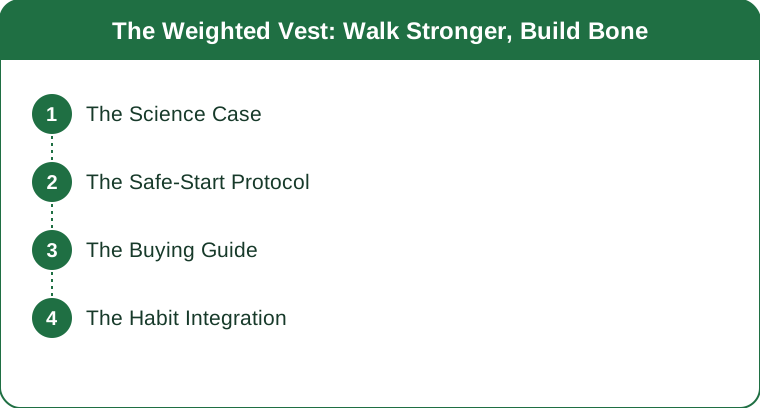
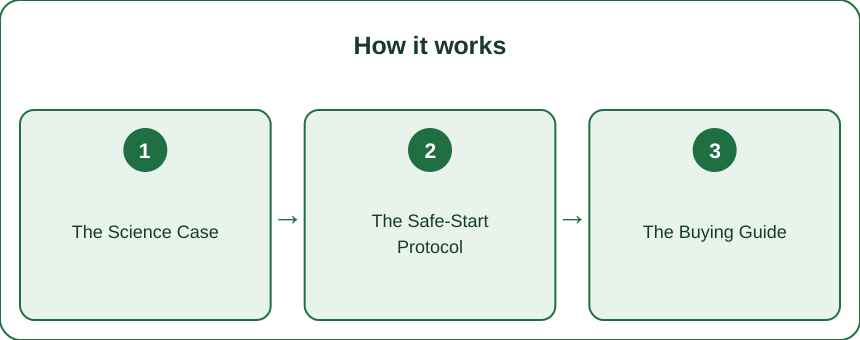
Why the trend has legs: bones adapt to load (the same principle as muscle — mechanical stress signals bone-building), and weighted walking adds that load through the skeleton’s key sites, which is why the research interest centers on midlife women and bone density. Additional returns: higher calorie cost per walk, added leg-and-core work, and posture demand (a good vest makes slouching harder). The evidence is promising-and-growing rather than settled — but the mechanism is textbook.
The Safe-Start Protocol
The graduation path: start at 5% of bodyweight or less (yes, that little — the tissue adaptation wants patience), walk your NORMAL routes for two weeks before adding time or hills, progress by a small increment monthly toward the commonly cited 10% ceiling, and skip running in it (impact multiplies; the vest is a walking tool for almost everyone). The audiences who should ask a professional first: existing joint, back or osteoporosis diagnoses — load is medicine and dosing is individual.

The Buying Guide
Vest anatomy: fitted over boxy (the modern women’s-cut vests hug like a snug backpack; the loose box vests bounce and chafe), adjustable weights (buy the vest you can load lighter and heavier — the fixed-weight vest fights the protocol), shoulder padding and chest-strap comfort (the fit points that decide whether it gets worn), and breathability (the vest is warm; summer wants the minimalist designs). The category ranges from sleek to tactical — the sleek ones win adherence.
The Habit Integration
Making it routine: the vest lives by the door (visibility is compliance), attach it to the existing walk (the dog loop, the podcast walk — upgrade what already happens), the non-vest days stay legal (alternating loaded and unloaded walks is a fine rhythm), and track the quiet wins (the same hill feeling easier unloaded is the adaptation announcing itself). The vest’s genius is that it asks for zero new time — just heavier minutes you were already walking.
Five percent start, fitted cut, walking only, attach to the existing loop. The weighted vest upgrades the walk you already take — and your skeleton, quietly, takes notes.
Keep Reading
This article is for general informational purposes only and is not medical advice. Always consult a qualified health professional for guidance specific to you.