4 Ways to Add a Weighted Vest to Stair Workouts Without Wrecking Your Knees
Quick Answer: Start with a lighter vest load than you’d use on flat ground, prioritize knee tracking over the toes on every step, use the handrail on unfamiliar or high-traffic stairwells, and add weight gradually over several weeks rather than jumping straight to your flat-ground max.
A weighted vest turns a normal stair session into real training stimulus fast — sometimes too fast, since the added load compounds with the impact stairs already put through the knees and ankles.

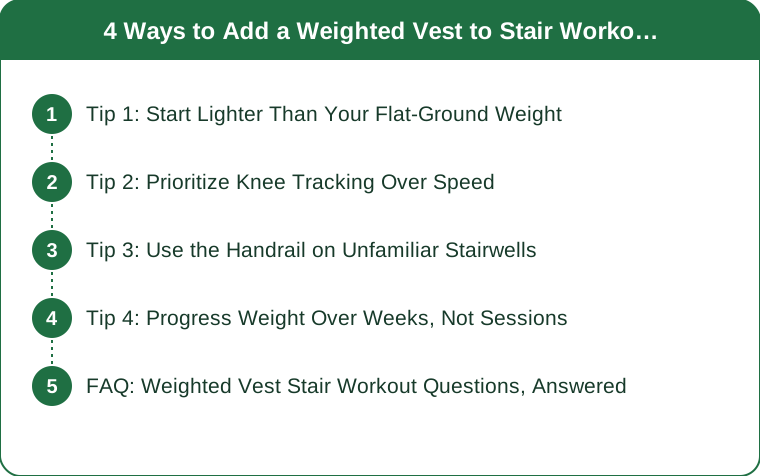
Tip 1: Start Lighter Than Your Flat-Ground Weight
Drop 5-10lbs below whatever vest weight you use for flat walking or strength work. Stairs already add eccentric knee loading on the way down; stacking your usual vest weight on top of that from day one is a common way people trigger unnecessary joint irritation.
Tip 2: Prioritize Knee Tracking Over Speed
Keep the knee tracking directly over the toes on every step, especially descending — this is where added vest weight most exposes any existing tendency toward knee cave-in. Slow down before you’d naturally choose to if form starts slipping.

Tip 3: Use the Handrail on Unfamiliar Stairwells
A weighted vest shifts your center of mass slightly, which matters more on uneven, unfamiliar, or high-traffic stairwells than on a stairmaster or a stairwell you know well. Keeping a light hand on the rail costs nothing and adds real stability margin.
Tip 4: Progress Weight Over Weeks, Not Sessions
Add weight in small increments every 2-3 weeks, not every session. Stair-specific loading adapts differently than flat-ground walking does, and rushing the progression is one of the more common ways this workout leads to knee or ankle soreness that lingers.
FAQ: Weighted Vest Stair Workout Questions, Answered
Is a weighted vest safe for stair workouts if I have knee issues?
Check with a physical therapist or doctor first — stairs already load the knees more than flat walking, and adding weight on top is a meaningful variable to clear with a professional if you have existing joint concerns.
How much weight is reasonable to start with on stairs?
Many people start around 5-10lbs specifically for stairs, even if their flat-ground vest weight is higher, then progress from there.
Should I go faster or slower with a vest on stairs?
Slower, especially on the descent — the added load makes control more important than pace, and rushing is where form and joint stress both suffer.
TL;DR:
- Use a lighter vest weight on stairs than you would on flat ground
- Watch knee tracking closely, especially on the way down
- Use the handrail on unfamiliar or high-traffic stairwells
- Progress vest weight over weeks, not session to session
Stairs and a weighted vest are a strong combo when the load is added gradually — rushing it is what turns a good workout into knee irritation.
Keep Reading
This article is for general informational purposes only and is not medical advice. Always consult a qualified health professional for guidance specific to you.