How Much Weighted Vest Load Is Actually Too Much? The Percentage Rule Trainers Use
Quick Answer: A common safe starting guideline is loading a weighted vest to no more than 10% of your bodyweight for walking or general conditioning, progressing gradually toward 15-20% only once your joints and gait have adapted. Loading heavier too soon is the most common cause of hip, knee, and lower back strain from vest training.
Weighted vests are marketed as a simple add-more-resistance tool, but jumping straight to a heavy load is exactly how people end up with joint pain instead of the fitness gains they were after.

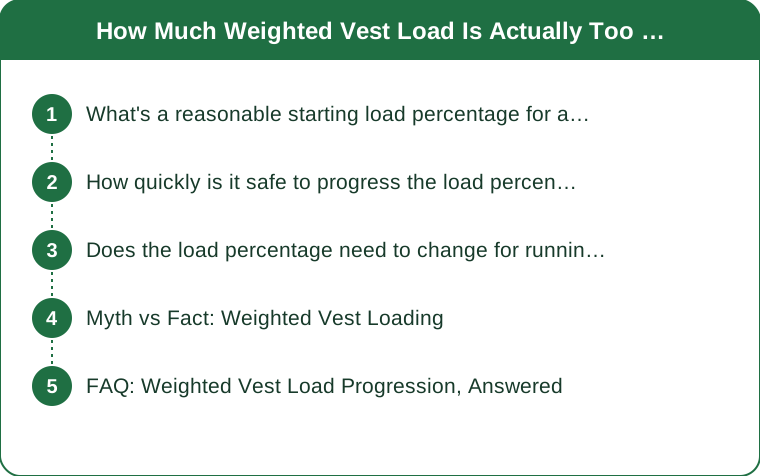
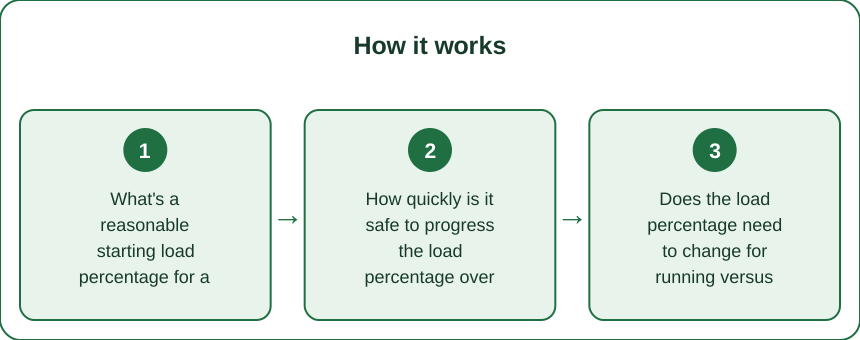
What’s a reasonable starting load percentage for a weighted vest?
Starting at 5-10% of your bodyweight is the widely used guideline for general walking or conditioning use, giving your joints, tendons, and gait pattern time to adapt to the added load before increasing it further. For a 150-pound person, that’s roughly 7.5-15 pounds to start — noticeably less than many people initially assume is worth bothering with.
This conservative starting point matters more than it seems, since added vest weight changes ground reaction forces through your hips and knees with every single step, compounding over a long walk or run.
How quickly is it safe to progress the load percentage over time?
A gradual increase of roughly 1-2% of bodyweight every 2-3 weeks, only once the current load feels fully comfortable through a full session, is a commonly used safe progression rate. Jumping from a 10% load straight to 20% because the lower weight felt easy is one of the most common vest-training mistakes, since ‘feels easy’ doesn’t account for cumulative joint stress over a longer session.
Most experienced trainers cap general conditioning use around 15-20% of bodyweight, reserving anything heavier for specific, supervised strength training contexts rather than everyday walking or running.

Does the load percentage need to change for running versus walking?
Running with a weighted vest multiplies ground impact forces far more than walking does at the same load percentage, so a load that’s comfortable walking can be genuinely risky running. Many trainers recommend a lower percentage ceiling specifically for vest running (closer to 5-10%) compared to vest walking (up to 15-20%) because of this impact difference.
If you’re using a vest for both walking and running, treat them as needing separate, independently progressed load levels rather than one fixed weight for everything.
Myth vs Fact: Weighted Vest Loading
Myth: More weight always means a better workout. Fact: Beyond a certain percentage, added weight increases injury risk faster than it increases fitness benefit, especially for running.
Myth: If a load feels easy in the first few minutes, it’s safe to keep increasing. Fact: Cumulative joint stress over a full session matters more than how the load feels in the first few minutes.
FAQ: Weighted Vest Load Progression, Answered
Is a weighted vest safe to use every single day?
Most trainers recommend at least a few vest-free sessions per week, since daily loaded impact without recovery time increases joint strain risk.
Should load percentage be lower for people with existing joint issues?
Yes, significantly — anyone with existing knee, hip, or back issues should start well below the general 5-10% guideline and consult a professional before progressing.
Does vest weight distribution (evenly spread vs concentrated) matter?
Yes — a vest that distributes weight evenly across the torso is safer than one that concentrates it, since concentrated load can affect posture and gait more than the same total weight spread out.
TL;DR:
- Start at 5-10% of bodyweight, not by feel or guesswork
- Progress about 1-2% of bodyweight every 2-3 weeks at most
- Cap running loads lower than walking loads due to impact force differences
- Take regular vest-free sessions to allow joint recovery
A weighted vest rewards patience with load progression — the injuries almost always come from skipping the percentage-based ramp-up, not from the vest itself.
Keep Reading
This article is for general informational purposes only and is not medical advice. Always consult a qualified health professional for guidance specific to you.