Look 1: Wearing a Weighted Vest All Day vs Just During Workouts
Quick Answer: All-day weighted vest wear provides low-level, prolonged bone and postural loading that a focused workout session doesn’t replicate, but it also carries more risk of postural compensation and joint strain if the weight is too heavy or worn inconsistently — most experts suggest starting with workout-only use before adding all-day wear.
All-day weighted vest videos are everywhere right now, but the two approaches aren’t interchangeable — they’re genuinely different training stimuli with different risks.
Look 1: What All-Day Wear Actually Provides
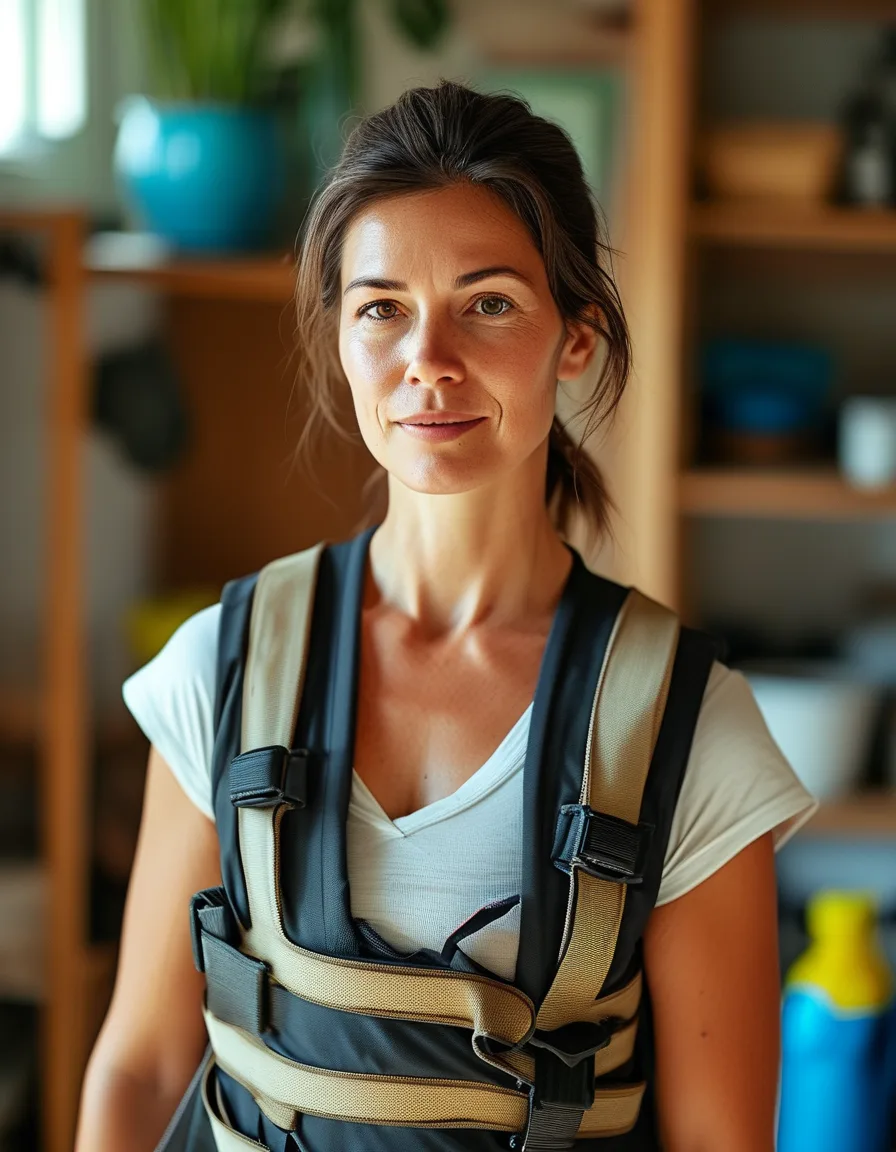
Prolonged, low-intensity loading throughout the day creates a different kind of mechanical stress than a single intense session — some research on bone density suggests that consistent, repeated low-level loading over time contributes meaningfully to bone health, complementing rather than replacing higher-intensity workout loading.
It also adds a small, steady increase in daily calorie expenditure and can reinforce postural awareness throughout normal activities like walking or standing, simply by making you more conscious of your body position under load.
Look 2: What Workout-Only Use Actually Provides
A focused session with a weighted vest — walking, stair climbing, bodyweight exercises — allows for a higher relative load for a shorter, controlled duration, which is the more traditional way to build strength and cardiovascular adaptation.
Because the exposure is limited to a defined session, it’s easier to monitor form and fatigue, reducing the risk of unnoticed postural compensation that can build up over a full day of wear.

Look 3: Where Does All-Day Wear Go Wrong
The most common problem is wearing too much weight for too long, which can gradually encourage compensatory posture — shoulders rounding forward, an altered gait — especially if the vest fits poorly or sits too low.
Many experts recommend all-day loads stay meaningfully lighter than workout loads specifically because the exposure duration is so much longer; a weight that’s fine for a 30-minute walk can create real strain across 8 hours.
Look 4: How Do You Combine Both Safely
A reasonable approach: use a heavier, workout-specific load (roughly 10-20% of bodyweight) for focused sessions, and if adding all-day wear, drop to a noticeably lighter load (5-10% of bodyweight) and build up wear duration gradually over several weeks rather than jumping straight to all-day use.
Paying attention to posture checks throughout the day — shoulders back, chin level — while wearing a vest for extended periods catches compensation early, before it becomes a habitual pattern.
Look 5: FAQ — Weighted Vest Wear Style Questions, Answered
Is all-day weighted vest wear actually better for bone density than workouts alone?
The research on prolonged low-level loading is promising but still developing — it’s reasonable to view it as a complement to, not a replacement for, structured resistance training for bone health.
Can you wear a weighted vest all day if you have back or joint issues?
This is a case where checking with a physical therapist or doctor first matters more than usual, since all-day loading on a compromised joint or spine can compound existing issues. This is general information, not medical advice.
How much weight is safe for all-day wear specifically?
Most guidance suggests staying well below your workout-session weight — 5-10% of bodyweight is a common conservative starting point for extended daily wear.
TL;DR:
- All-day wear provides low-level, prolonged loading; workout wear provides higher, controlled loading
- All-day wear risks unnoticed postural compensation if the weight is too heavy for the duration
- Use a heavier load for focused workouts, a lighter load if adding all-day wear
- Build all-day wear duration gradually and check posture throughout, not just at the start
The two styles complement each other when dosed correctly — the mistake is treating all-day wear like a workout and loading it the same way.
Keep Reading
This article is for general informational purposes only and is not medical advice. Always consult a qualified health professional for guidance specific to you.