Weighted Vest Chafing? The Fit Fix That Stops It in One Walk
Quick Answer: Vest chafing almost always comes from a too-loose fit letting the vest bounce, not a too-tight one. Cinch the side straps until the vest moves with your ribcage — zero bounce — then add a thin moisture-wicking layer underneath. That combination stops 90% of rub spots within one walk.
You did everything right — good vest, reasonable weight, solid walking route — and still came home with a raised red line across your collarbone. Chafing isn’t a weight problem. It’s almost always a movement problem, and it has a fast fix.

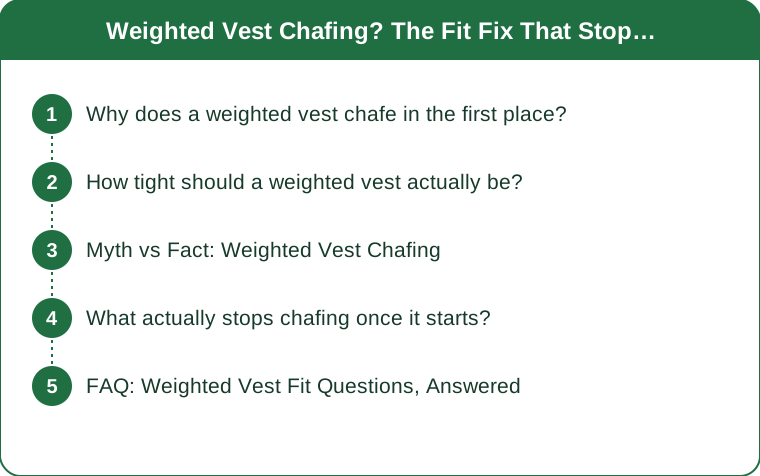
Why does a weighted vest chafe in the first place?
Because a loose vest doesn’t sit still. Every step it bounces a few millimeters against your skin, and by minute 20 that tiny repeated friction turns into a raw stripe — usually right at the collarbone, underarm, or lower rib line where fabric edges cross bone.
People instinctively loosen the vest thinking tighter equals more painful. It’s backwards: a snug vest that moves as one unit with your torso creates far less friction than a loose one bouncing independently with every stride.
How tight should a weighted vest actually be?
Tight enough that you can slide two fingers under the strap, no more. Do the bounce test: jog in place for 10 seconds. If the vest shifts or slaps against your chest, it’s too loose — cinch the side straps another notch.
Start with the bottom strap first (it controls the most bounce), then the shoulders. A vest that’s correctly fitted will feel almost too snug standing still and perfectly normal once you start moving.

Myth vs Fact: Weighted Vest Chafing
Myth: Heavier vests chafe more. Fact: Weight barely matters — fit and fabric contact matter. A tightly fitted 20lb vest chafes less than a loose 10lb one.
Myth: A shirt underneath always helps. Fact: Only if it’s moisture-wicking and snug. A loose cotton tee adds its own extra layer of bunching fabric and can make chafing worse.
Myth: Chafing means the vest doesn’t fit your body type. Fact: Almost every weighted vest chafes on a loose setting, regardless of body shape. Adjust before you replace.
What actually stops chafing once it starts?
For the walk itself: a thin anti-chafe balm or stick on collarbone, underarm, and rib contact points — the same product runners use for thigh chafe works here.
For gear: a compression tank underneath creates a smooth single surface between skin and vest, which eliminates most independent-layer rubbing. And re-check strap tension every 10 minutes on a new vest — straps settle and loosen as fabric warms up.
FAQ: Weighted Vest Fit Questions, Answered
Should I wear a weighted vest with or without a shirt?
With a thin, snug, moisture-wicking layer. Bare skin against vest fabric increases friction; a loose cotton shirt adds bulk that bounces. Snug and thin is the sweet spot.
How do I know if my weighted vest is too big overall?
If the shoulder straps sit past your actual shoulder line or the vest length extends below your natural waist, it’s sized up — go down a size rather than just tightening straps to compensate.
Is some chafing normal when starting out?
Mild, brief warmth is common in week one as you learn your fit. A raised red line or broken skin is not — that’s a fit problem, not a break-in period, and needs the strap adjustment above.
TL;DR:
- Loose vests bounce and chafe more than snug ones — tighten, don’t loosen
- Two-finger test under the strap; bounce test by jogging in place 10 seconds
- Thin moisture-wicking layer underneath, anti-chafe balm on contact points
- Re-check strap tension every 10 minutes on a new vest as fabric warms
Fix the fit before you blame the vest — most chafing disappears in one properly-cinched walk.
Keep Reading
This article is for general informational purposes only and is not medical advice. Always consult a qualified health professional for guidance specific to you.