Buying a Weighted Vest: The Fit, the Weight Systems and the Specs That Matter
The weighted vest market spans tactical plate carriers to walking-specific designs, and the wrong buy bounces, chafes and gathers dust — while the right one disappears on your shoulders for years of loaded miles. The vest buying guide.

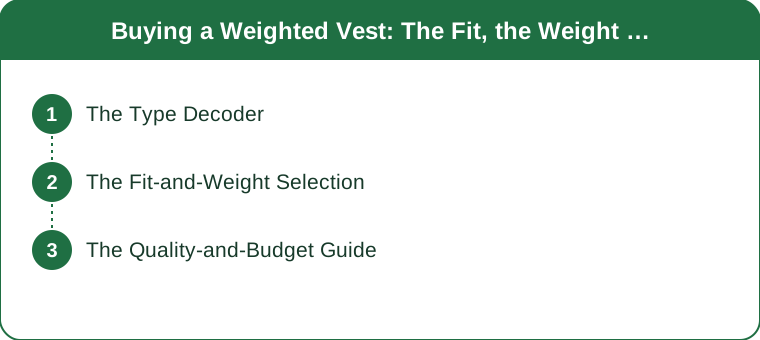
The Type Decoder
Vest by vest: the walking-specific vests (the soft, thin, torso-hugging designs — the micro-load distribution; the 2-10kg range; the walking-and-daily-wear tier from the vest doctrine), the plate-carrier style (the tactical-derived flat-plate vests — the compact load close to the spine; the workout-and-ruck crossover per the rucking doctrine; the fixed-jump weights), the adjustable-pocket vests (the incremental-weight designs with removable blocks — the progression-friendly system from the progression doctrine; the bulkier profile trade), the long-vest caution (the torso-length designs bouncing on shorter frames — the women’s-fit note: the shorter, contoured cuts existing per the fit doctrine), and the use-case matching (the daily-walk buyer wanting the soft thin tier — the workout-and-ruck user wanting the plate style; the machine matched to the mission per the use-case doctrine).

The Fit-and-Weight Selection
Getting both right: the fit priorities (the vest riding HIGH and SNUG — the bounce being the comfort-killer per the rucking doctrine; the adjustable straps cinched; the shoulder padding for the load), the women’s-fit specifics (the chest-accommodating cuts — the strap geometry that doesn’t compress; the contoured designs per the fit doctrine; the reviews mined from similar builds per the review doctrine), the starting-weight rule (the 5-percent-bodyweight start from the vest doctrine — the 10-percent ceiling for walking; the too-heavy start being the classic abandonment; the light-and-longer beating heavy-and-brief per the progression doctrine), the progression math (the adjustable systems earning their price IF you’ll progress — the fixed-weight simplicity for the walk-only user), the movement test (the vest worn through squats-reaches-and-a-brisk-walk before keeping — the bounce-and-chafe audit per the trial doctrine; the return window used), and the breathing check (the deep-belly breath possible fully loaded — the chest-compression fail per the breath doctrine).
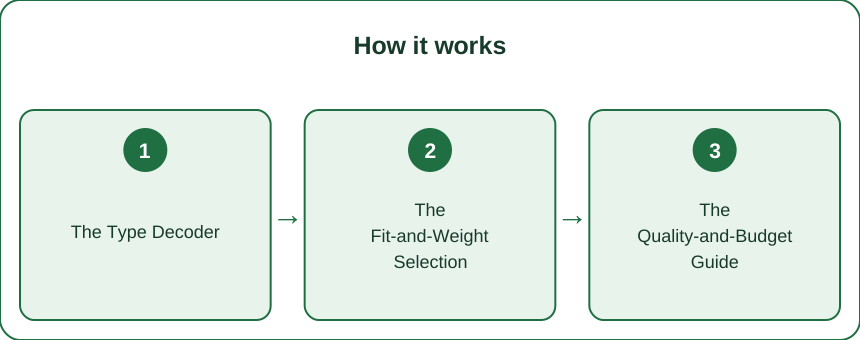
The Quality-and-Budget Guide
Buying once: the construction checks (the stitching at the weight pockets — the strap-and-buckle quality; the load-bearing seams inspected per the gear doctrine), the fabric-and-comfort specs (the moisture-wicking liners for sweaty miles — the chafe-point padding per the chafe doctrine; the washable-cover practicality per the care doctrine), the budget tiers (the 40-80 walking-vest sweet spot — the 100-200 plate-carrier tier; the under-30 vests’ pellet-leak and strap-failure honesty per the budget doctrine), the safety notes (the joint-and-back conversations for the relevant histories per the medical doctrine — the pelvic-floor consideration from the floor doctrine; the posture watch under load per the posture doctrine), the care basics (the sweat-wipe and air-dry rhythm — the weight-out storage for the pocket systems), and the closing frame (the vest bought snug, light and washable — the load that disappears on the shoulders; the walking upgraded per the vest doctrine; the dust, gathered by other people’s vests). Snug and high, 5-percent start, movement-tested before keeping: the vest, bought to be worn.
Match the vest to the mission: soft thin torso-huggers for daily walking, plate-carriers for workouts and rucking — and fit beats everything: high, snug, bounce-free, with a full belly breath possible loaded. Start at 5 percent of bodyweight (10 is the walking ceiling), movement-test in the return window, and spend $40-80 for the walking tier; under-$30 vests leak pellets.
Keep Reading
This article is for general informational purposes only and is not medical advice. Always consult a qualified health professional for guidance specific to you.