5 Weighted Vest Fit Checks Once You Start Layering
Quick Answer: Layers change vest fit in three ways: added bulk means the straps are effectively looser relative to your body, thicker fabric slides more than skin-adjacent fabric, and a vest over a zip or a hood creates new pressure points. Re-fit the vest over the layers you will actually wear — never over a t-shirt — and re-check after the first 10 minutes when the layers have compressed.
Summer fit: dialled in.
First cold walk: the vest rides up, the shoulder straps chafe, and the whole thing sits two inches higher than it should.
Nothing broke. You added a fleece.
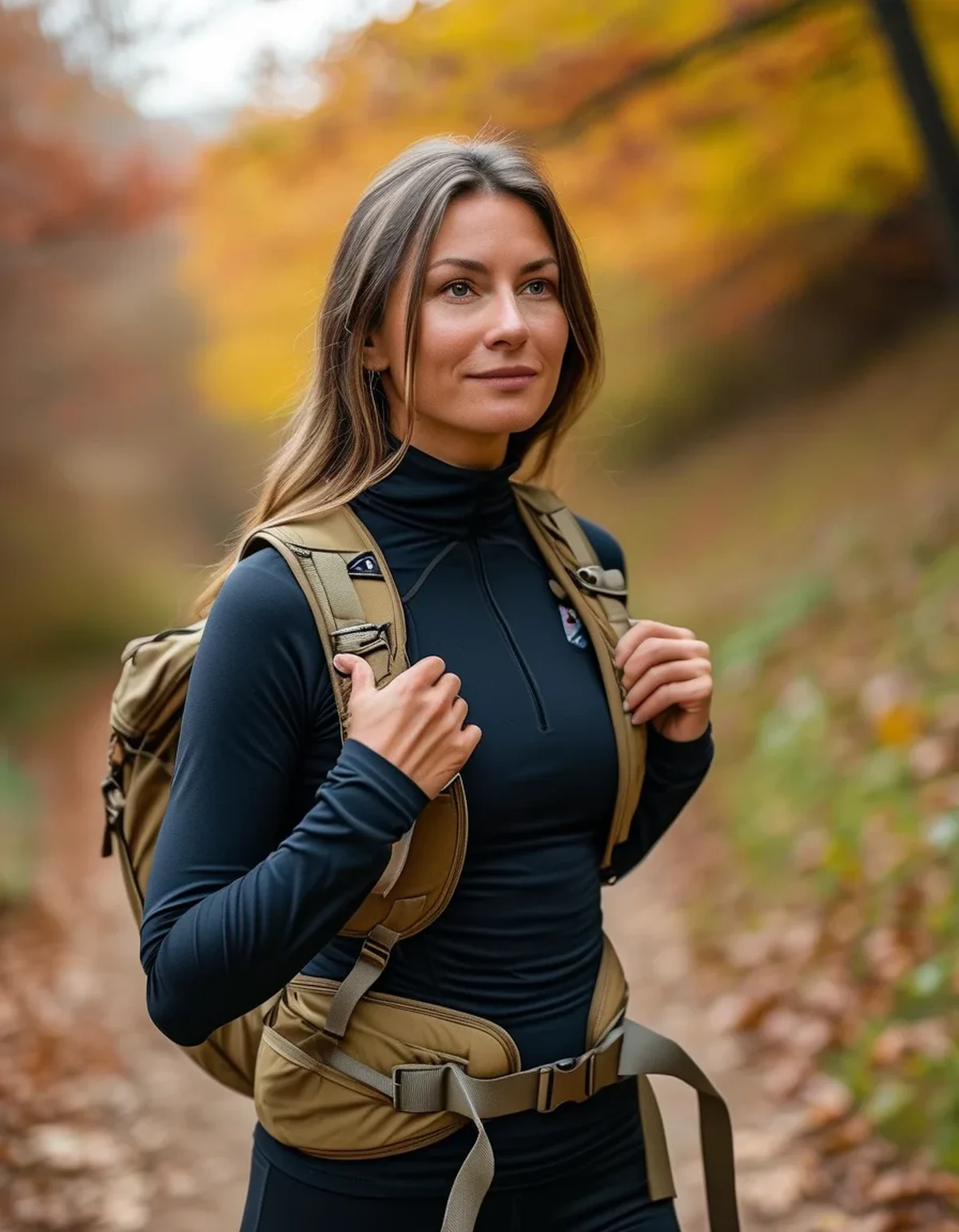
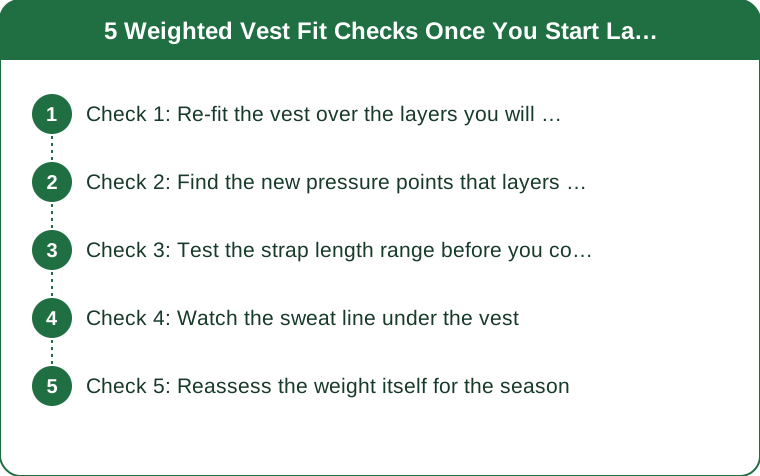
Check 1: Re-fit the vest over the layers you will actually wear
A vest fitted over a t-shirt is fitted to the wrong body, and the error is bigger than people expect.
A mid-weight fleece adds real bulk around the torso. The vest straps that sat correctly against a thin base layer are now wrapped around a larger, softer circumference — and soft is the problem. Compressible layers squash under load, so the vest starts snug at minute zero and is loose by minute ten as the fleece flattens under the weight.
Which is why the classic autumn complaint is a vest that rides up mid-walk. It is not the vest loosening; it is the insulation compressing.
Three things to do about it.
Fit over the actual outfit, standing, before you leave. Not over the shirt you happen to be wearing indoors.
Re-tighten after 10 minutes. By then the layers have compressed to their working thickness and the straps need another pull. This single habit fixes most cold-weather vest complaints, and almost nobody does it.
Favour smooth, less compressible layers under the vest. A close-fitting technical mid-layer works far better than a lofty fleece — the loft is exactly what disappears under load. Save the puffy layer for after the walk, when you need it more anyway.
Check 2: Find the new pressure points that layers create
Every layer adds seams, zips and hardware, and the vest presses all of them into you for the length of the walk.
In summer a vest sits over one smooth t-shirt. In autumn it sits over a base layer seam, a mid-layer zip, possibly a jacket collar, and whatever hardware those bring — and load turns a barely-noticeable seam into a hot spot within a couple of kilometres.
Four specific offenders worth checking before you leave.
The front zip under the vest’s chest strap. A metal zip pull trapped under a loaded strap is the most common cause of a bruised sternum. Tuck the pull to one side, or choose a half-zip that stops above the strap line.
Shoulder seams under the vest straps. A raglan seam running exactly under a loaded strap will make itself known. Base layers with flatlock or offset shoulder seams are worth having if you vest regularly.
A hood bunched at the back of the neck. Hoods gather into a thick roll right where the vest’s shoulder straps cross. It feels fine at the start and produces a distinct sore patch by the end. Wear a hoodless mid-layer under the vest and carry the hooded one for after.
And anything in a chest pocket. A phone in a chest pocket under a loaded vest is genuinely painful after 3km. Move it to a hip pocket or a pack.
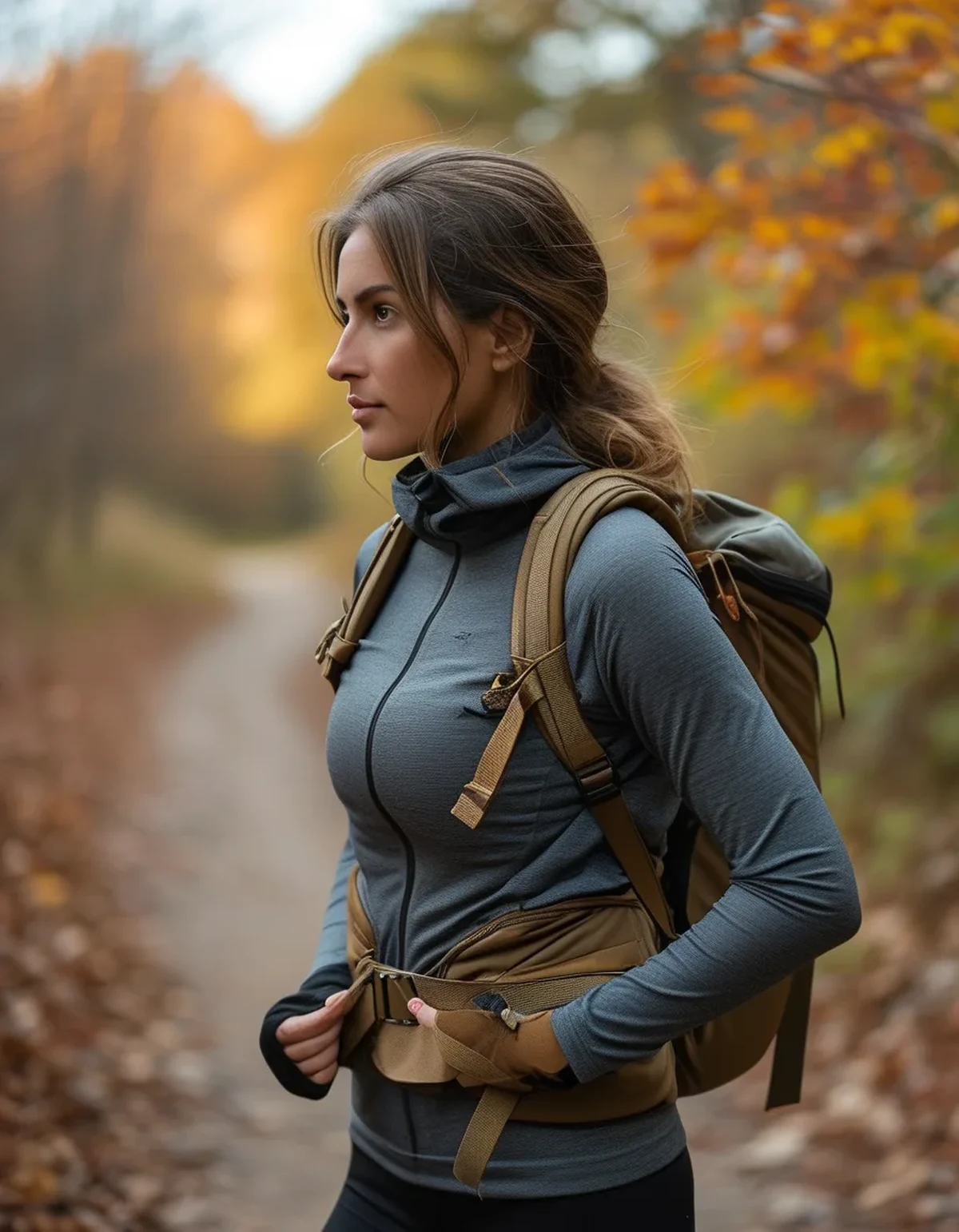
Check 3: Test the strap length range before you commit
Some vests simply do not have enough adjustment left to accommodate winter layers, and finding out at the start of a walk is a wasted walk.
Adjustable vests have a finite range. If you set yours near the loose end of that range in summer over a t-shirt, you may have almost nothing left when you add two layers. Conversely, a vest that was near the tight end in summer might now sit correctly — but check, rather than assume.
Four things to verify at home, loaded, in full layers.
Can you still tighten it at least two more clicks or two more centimetres? You need spare range for the mid-walk re-tighten after the layers compress.
Does the vest still sit high on the torso? The load should sit close to your centre of mass, high on the chest and back — not sagging toward the waist, which changes your posture and loads the low back.
Can you take a full breath at the tightest setting you might need? Restricted breathing under load is a real problem on hills, and a vest tightened over layers can be tighter than it feels standing still indoors.
Can you get it on and off with cold hands? Fiddly buckles that were fine in September are genuinely difficult with cold fingers or gloves on. If you cannot loosen it quickly, you cannot manage your temperature on the walk — and that matters more than it sounds.
Check 4: Watch the sweat line under the vest
A weighted vest is an insulating panel strapped to your torso, and in cold weather that changes your temperature management entirely.
The area under the vest stays warm and does not ventilate. The areas outside it — arms, lower back, neck — cool normally. The result is a torso that is sweating heavily under an unventilated panel while everything else feels cold, which is uncomfortable during and genuinely chilling afterwards.
Four adjustments that fix it.
Wear one less layer than you would for the same walk without the vest. The vest is worth roughly a layer in itself over the torso. Starting slightly cool is correct; you will be warm within ten minutes.
Choose a wicking base layer, not cotton. Wet cotton under an unventilated panel is the fastest route to being cold at the turnaround point. Merino or synthetic, always.
Plan for the stop. The moment you stop moving, that sweat starts cooling you rapidly. Take the vest off at the end and put a dry layer on immediately, especially if you have a drive home.
And on a wet day, keep the vest under the shell rather than over it. A soaked vest gets heavier, dries slowly, and its padding holds water against you for hours. Most vests are not designed to be rained on directly.
Check 5: Reassess the weight itself for the season
Autumn conditions change what a given load costs you, and the vest weight that suited summer pavement may be wrong for autumn trails.
Four reasons to consider going lighter as the season turns.
Surfaces get slippery. Wet leaves, mud and early frost all reduce traction, and a load high on the torso raises your centre of mass, which makes slips harder to recover from. On a wet trail, less weight is a balance decision, not a fitness one.
Layers already add weight and restriction. A jacket, gloves and a hat plus a vest is a different load than a vest over a t-shirt, and the restriction affects arm swing.
Cold muscles produce less force early on. The first kilometre under load with cold tissue is where niggles start. Walk the first 5-10 minutes without the vest and put it on once you are warm — this is the single best habit for cold-weather vest walking.
And daylight is shorter. More walks happen in low light on uneven ground, which is another argument for keeping the load conservative.
Standard guidance keeps a walking vest under roughly 10% of bodyweight, with 5% a sensible starting point, and there is no benefit to pushing that in worse conditions. This is general information, not medical advice — anyone with back, joint, balance or pregnancy considerations should get individual guidance before loading up.
TL;DR:
- Fit the vest over the layers you will actually wear, and re-tighten after 10 minutes once the insulation compresses.
- Hunt the new pressure points: zip pulls under the chest strap, shoulder seams, bunched hoods, chest pockets.
- Check you have adjustment range left and that the load still sits high, not sagging toward the waist.
- Wear one less layer than usual — the vest insulates — and keep a wicking base layer plus a dry top for afterwards.
- Walk the first 5-10 minutes unloaded, and keep the weight conservative on wet or icy ground.
Run these before your next cold walk. Four of the five take under a minute, and they are the difference between a good hour out and a chafed shoulder.
Keep Reading
This article is for general informational purposes only and is not medical advice. Always consult a qualified health professional for guidance specific to you.